ungovr.providers.sgit.ai / decks / What the build refuses
What the build refuses
Thirty-two checks, and the defect that produced each one · 10 slides · September 2026
A promise nobody checks is decoration
This site makes claims about itself: that it contacts nothing, that vault content is republished byte for byte, that every figure is generated rather than typed.
Thirty-two checks turn those from sentences into facts. The build fails; the release does not ship.
What makes the list worth reading is that almost every entry has a story, and the story is usually that we got it wrong first.
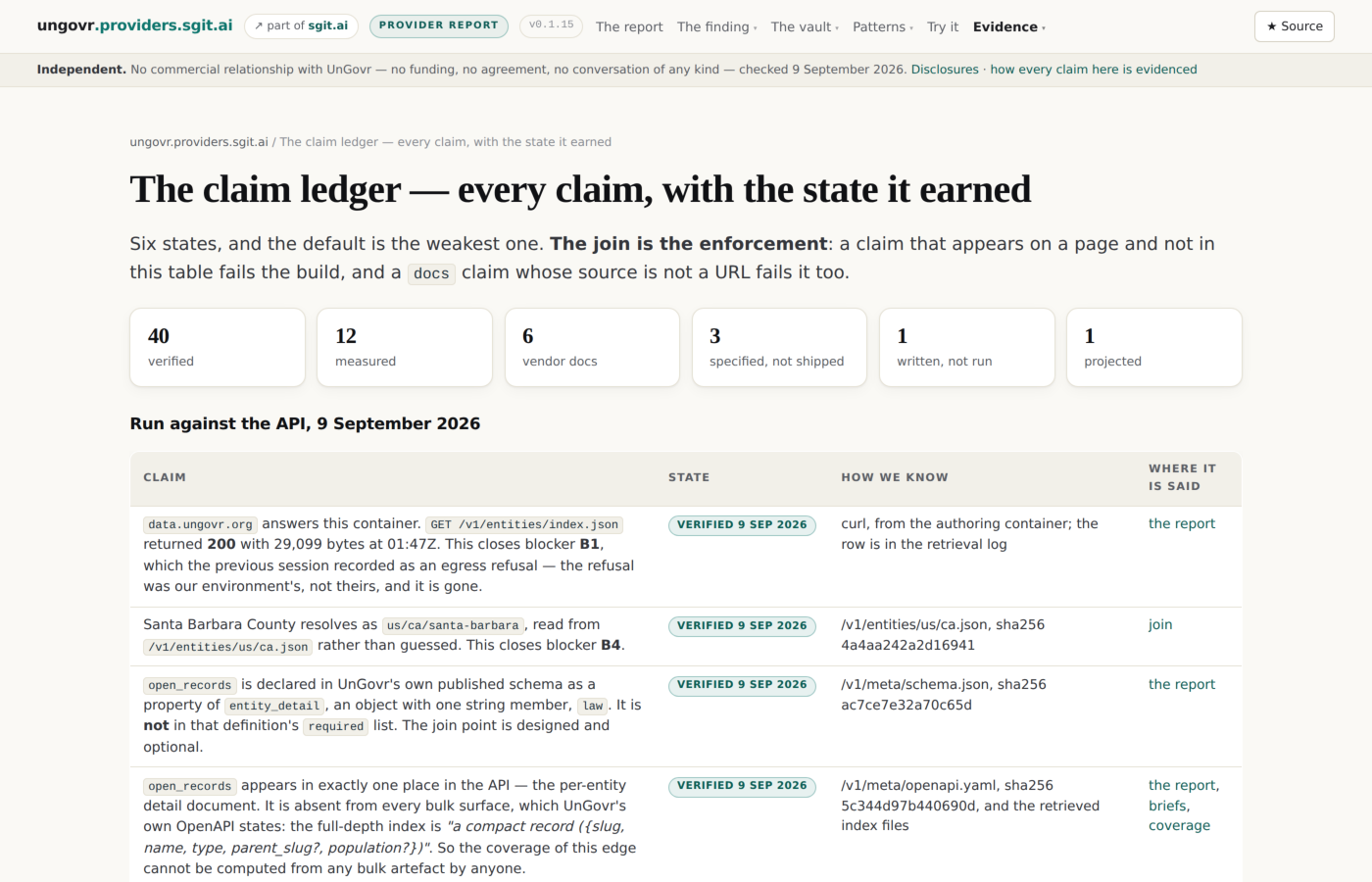
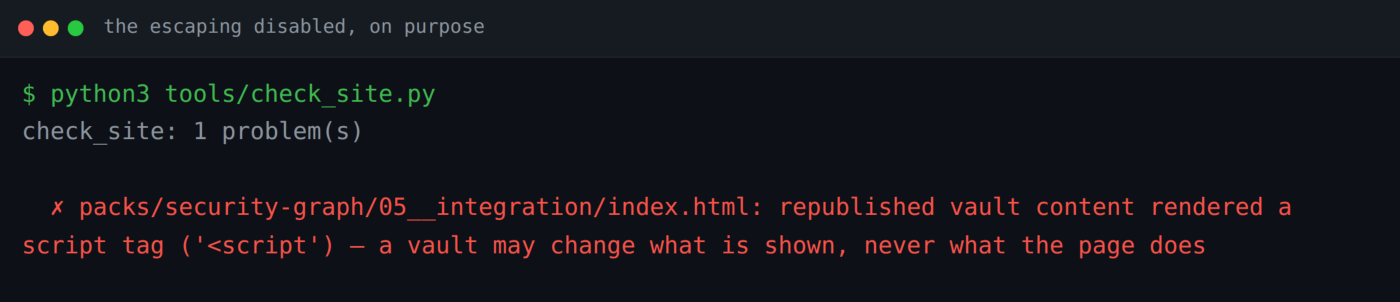
The worst one: a vault document could run script here
Reading sgit.ai's guidance turned up the rule this site was breaking:
On a
*.sgit.aipage there is no host — you are the host — and the bytes you render were written by whoever holds the vault's write key. A vault must be able to change what is shown, and never what the page does.
A <script> in a pack file became a real script tag and executed. So did <img src=x onerror=…>. Confirmed in a browser, not reasoned about.
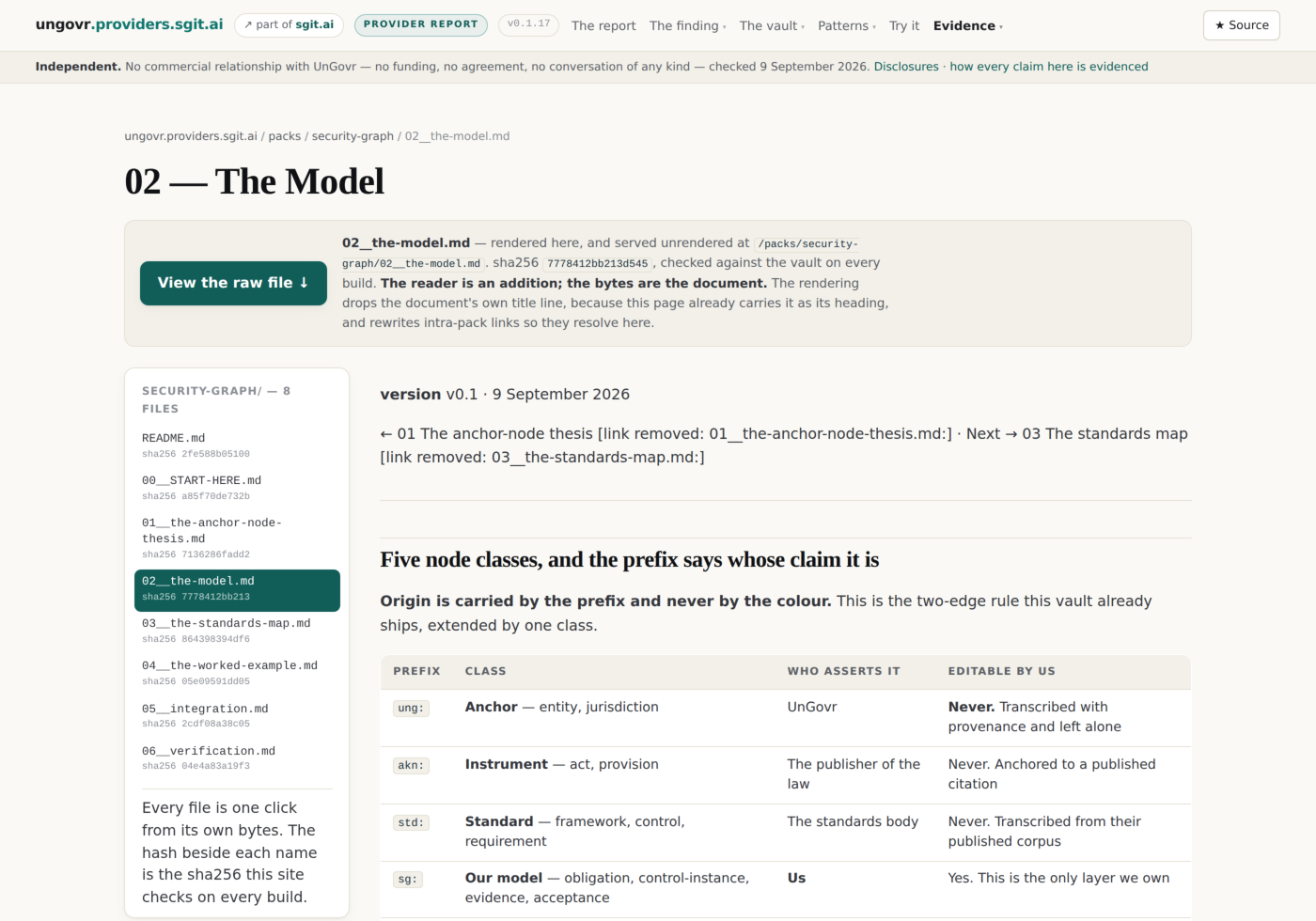
The fix, and the gate that keeps it fixed
Republished vault files render in an untrusted mode: raw HTML escaped, no shortcodes — a vault file must not mint a claim chip either — and links restricted to http, https, mailto, a relative path or a fragment.
A markdown link was the second vector: [x](javascript:…) minted a live javascript: href.
check_no_vault_markup reads the built pages rather than trusting the flag was set.
The false positive that would have taught the wrong lesson
The first version of that gate flagged this, in a page that was working correctly:
<img src=x onerror="…">
That is the escaper doing its job — inert text, not markup. A gate that fires on its own fix teaches the next person to loosen the fix until the gate goes quiet.
Every pattern now requires a real < or a real attribute.
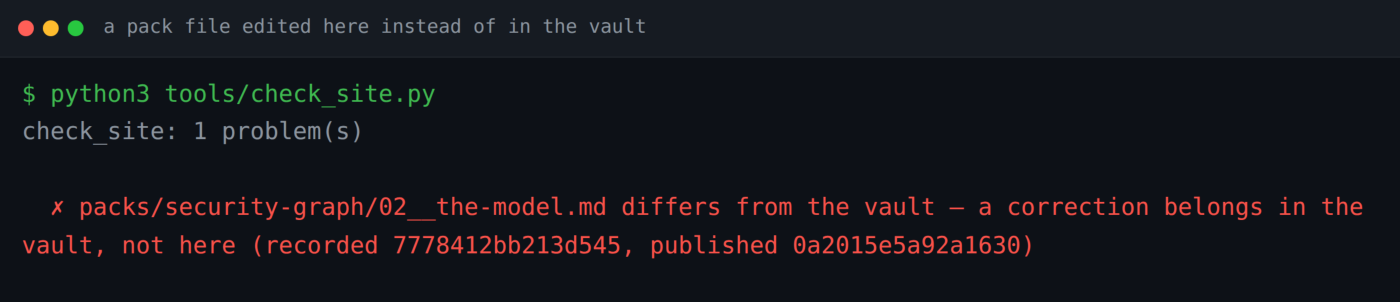
A pack file edited here instead of in the vault
Two paths carry every republished file — the raw copy and the twin beside its rendered page — and both are hash-checked against the vault.
Change either and the build stops and names it.
A correction belongs in the vault. Making it on the site would leave two documents that disagree and no way to tell which is the source.
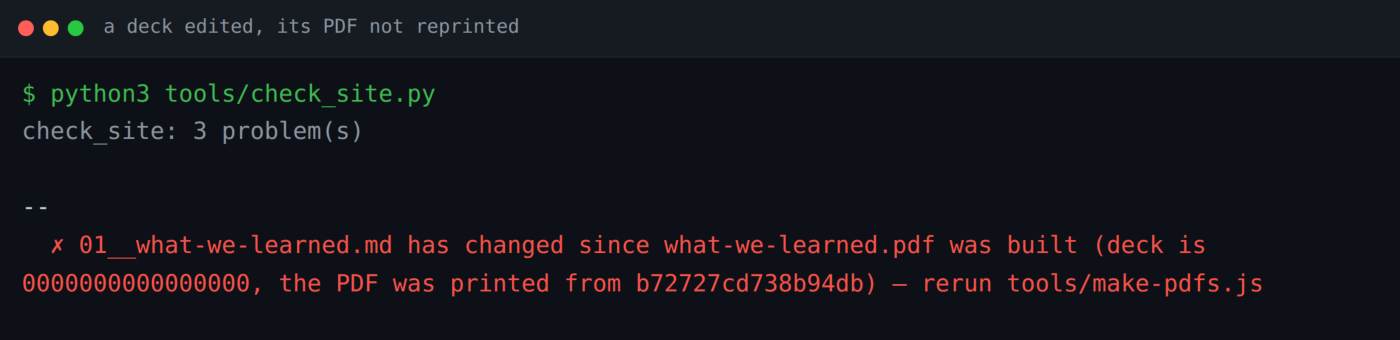
A deck edited, its PDF not reprinted
The PDFs are generated by a browser and committed, because CI has no browser and a deck nobody can download is not the point.
That makes staleness the risk — so data/deck-pdfs.json records the sha256 of the deck each PDF was printed from, not of the PDF alone.
Move the words, and the build demands the PDF be reprinted.
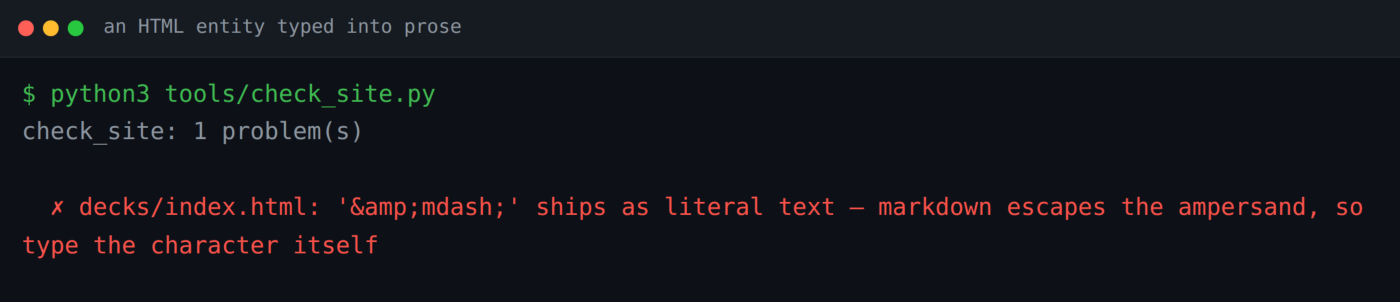
An HTML entity typed into prose
— in a page's lead shipped as six literal characters. Markdown escapes the ampersand first, so the reader sees — rather than a dash.
It went out in v0.1.14 and was caught in a screenshot, not by a check. The build was perfectly happy.
The check that now catches it caught four more of mine within the hour.
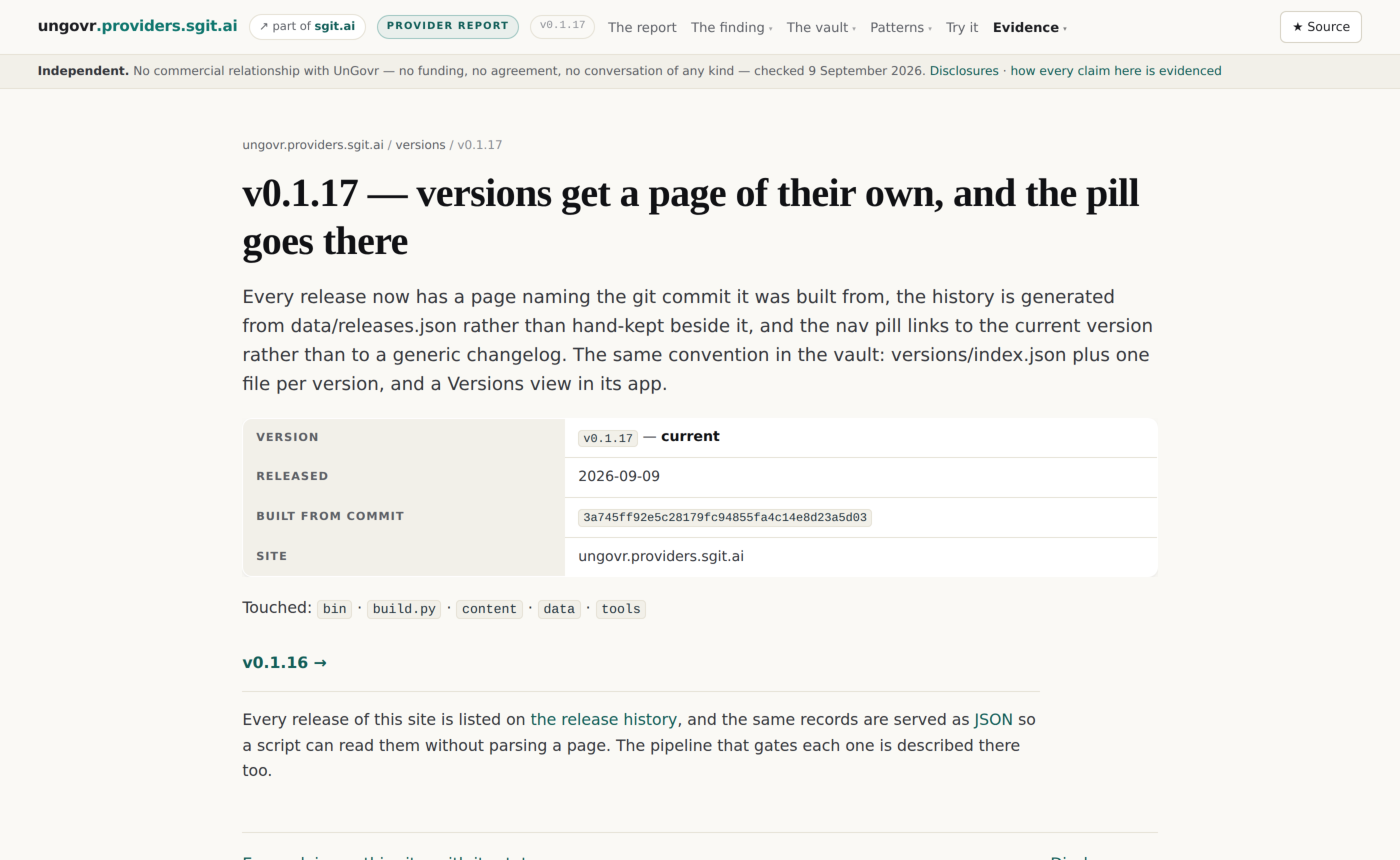
A release that cannot be traced to a commit
Record the commit. A version that does not name the commit it was built from cannot be verified later.
sgit.ai/docs/guidance
Eighteen releases, eighteen commits. The gate refused this very release when it had none — which is how the workflow's own flaw was found.
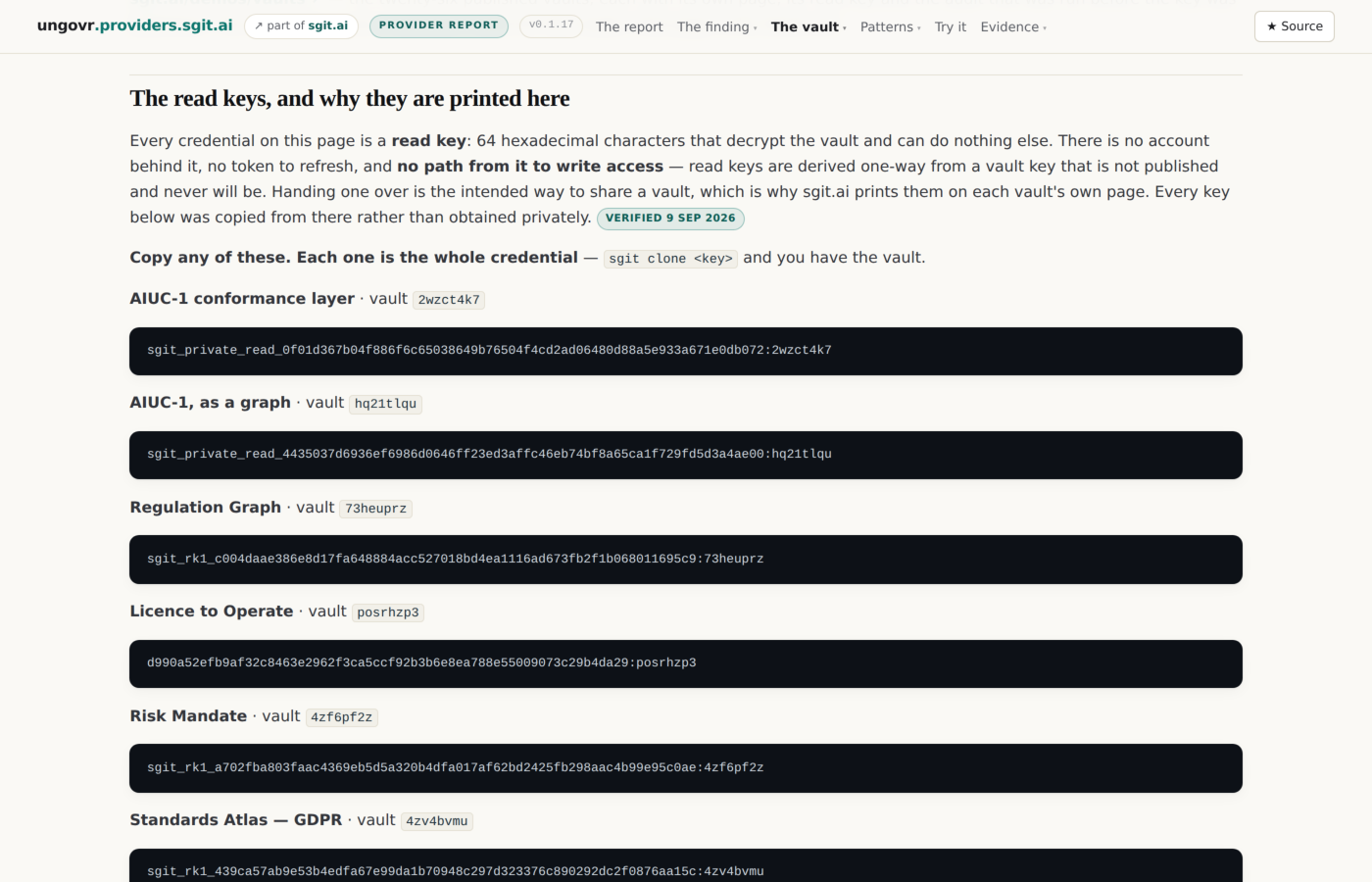
The scan that had to look past its own prefixes
A credential scan built for sgit shapes will not catch other secrets. We nearly published an OpenRouter key sitting in a vault file, in a field called
openrouter_key, that matched none of the sgit patterns.
Seventeen patterns now, including one that matches a credential named by its field rather than by a known prefix.
The first version of that pattern did not catch openrouter_key either — the anecdote repeating itself inside the fix for the anecdote. Caught by testing it against the case.
What this does not prove
No check proves a site is correct. Thirty-two of them prove that thirty-two specific things that once went wrong cannot go wrong silently again.
The defects that shipped were found by reading the guidance, driving a browser, parsing a table with a script, and looking at a screenshot — not by the checks.
Checks are memory, not judgement. They stop you making the same mistake twice; they have never once found a new one.
These slides are rendered from 06__what-the-build-refuses.md, republished byte for byte from the vault. The live decks — the same file, parsed by the vault's own app — are in the Decks view of the vault, which moves the moment the vault does. This page moves when the site rebuilds.